
Airla insights · Updated 8 October 2026
A high-level window can bring light and fresh air into a space, yet remain awkward to reach. Window automation gives a suitable opening a motorised means of operation, with controls selected around the people using the building.
For builders, architects and window manufacturers, the opportunity is to consider that movement early. The window configuration, mounting details, power, cable routes and control strategy all need to work together. Here is a practical starting point for planning window automation in an Australian new build.
1. Start with the use of the space.
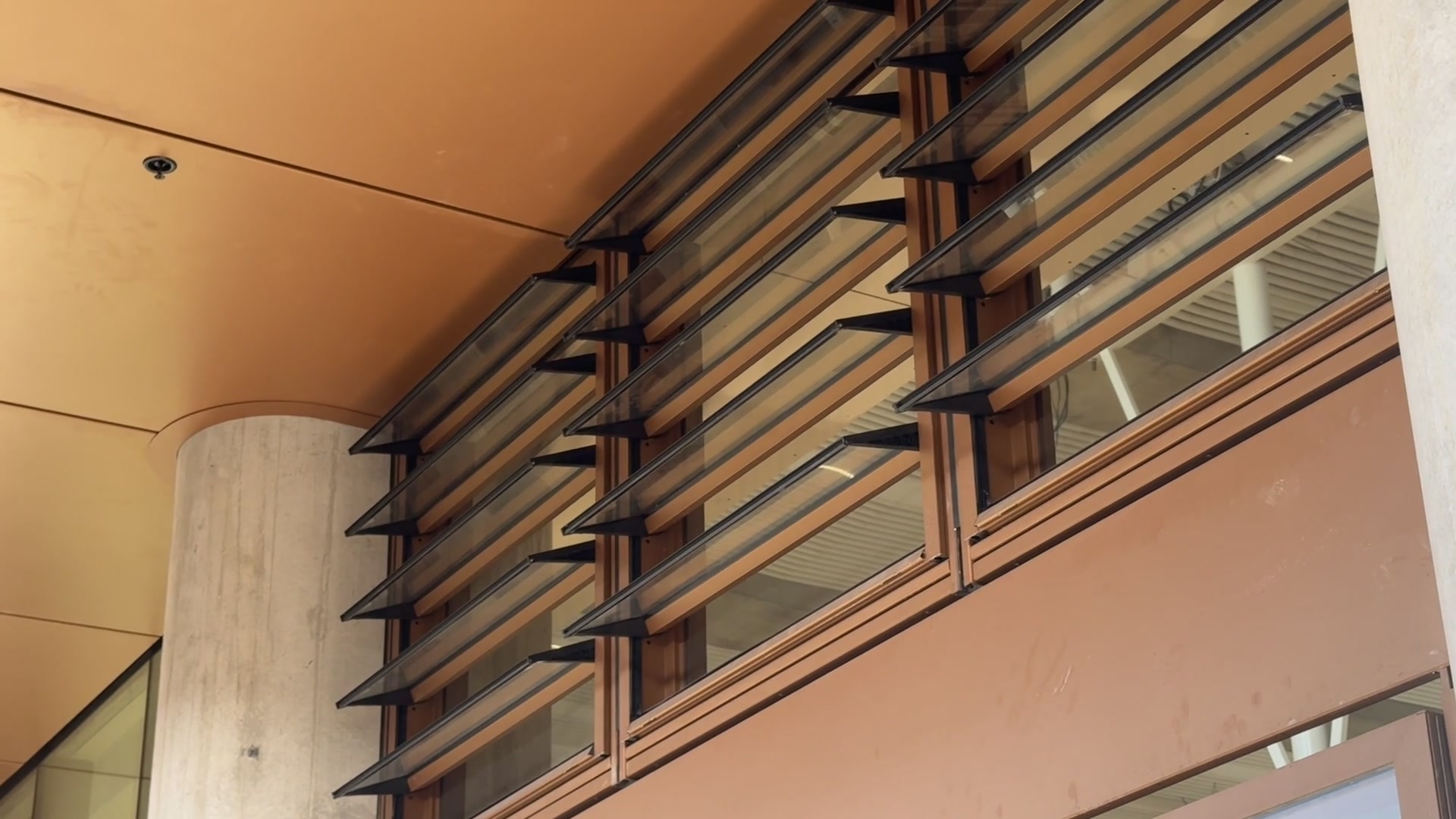
Identify the windows people need to operate and the benefit you want to deliver. In a home, that might be a servery opening or a window above a stair. In a school, gym or shared building, it might be a bank of high-level windows that needs a convenient control point.
Record whether each opening will operate individually or in a group. Explain who will use the controls and where they will stand. This gives the project team a clearer brief than selecting an actuator before the opening and its use are understood.
2. Bring the window manufacturer into the conversation.
Airla supplies and installs the automation: actuators, motors and controls. Your window manufacturer supplies the window, frame, glazing and relevant hardware. Early coordination helps establish the mounting arrangement, available space and movement the selected opening can accommodate.
Share the window schedule and drawings, including dimensions, opening configuration, hinge position and estimated moving weight. Identify any hardware or locking arrangement that the automation needs to work with. Product selection should follow that assessment.
3. Match the actuator to the opening.
Different openings call for different forms of movement. Chain actuators provide controlled push-and-pull movement for suitable window configurations. Linear actuators and power struts provide another option where the opening, mounting and load call for them.
| What you are planning | What to explore with Airla |
|---|---|
| A suitable awning or high-level window | Chain actuators, including the SCE100S, SCE300S, LCD300 and TCE300 options in the range. Confirm the model against the opening and required movement. |
| A suitable strut or servery application | 600N and 1000N power struts. Assess mounting, available space and the opening’s load. |
| Several windows operated together | Window controllers, switches and remotes, with the control grouping agreed as part of the design. |
These are starting points for a discussion. The actuator model, quantity and operating arrangement need to be confirmed for the individual opening.
4. Resolve power, cable routes and access early.
Coordinate power and cabling with the electrical contractor before finishes are complete. The motor location, controller location and wall-control position should appear in the relevant project information.
Allow for installation, commissioning and future access to the automation equipment. If a window is high above a floor or in a difficult position, identify how the team will reach it. Clear responsibilities and access arrangements help avoid late changes on site.
5. Choose a control strategy people can understand.
A wall switch can provide a familiar control point. A compatible remote may make an opening easier to use from elsewhere in the room. Environmental sensors or integration with a proposed smart-home or building management system may also be relevant.
Explain the intended response and confirm compatibility with the selected equipment. Agree which controls remain available locally and what the user should do during a power interruption. Explore Airla controls and integration as part of that discussion.
6. Plan commissioning and handover.
Check the agreed movement and controls with the installed opening. The handover should identify which control operates each window or group, the relevant operating instructions and the project contacts.
Facilities teams and homeowners need information that relates to their actual installation. Our automation support guide sets out useful handover questions and the details to include if help is needed later.
See window automation in Australian projects.
Airla’s project collection includes window automation at Ravenswood and the St George Illawarra Dragons Centre of Excellence. These examples show how motorised movement can be applied to larger shared spaces. Residential applications, including servery windows, are also shown on our window automation page.
Start your own assessment with a window schedule, drawings, photos or a clear description of the opening. Airla can then help define the automation scope with your project team.